BTL · Retail · Dealer · Activation
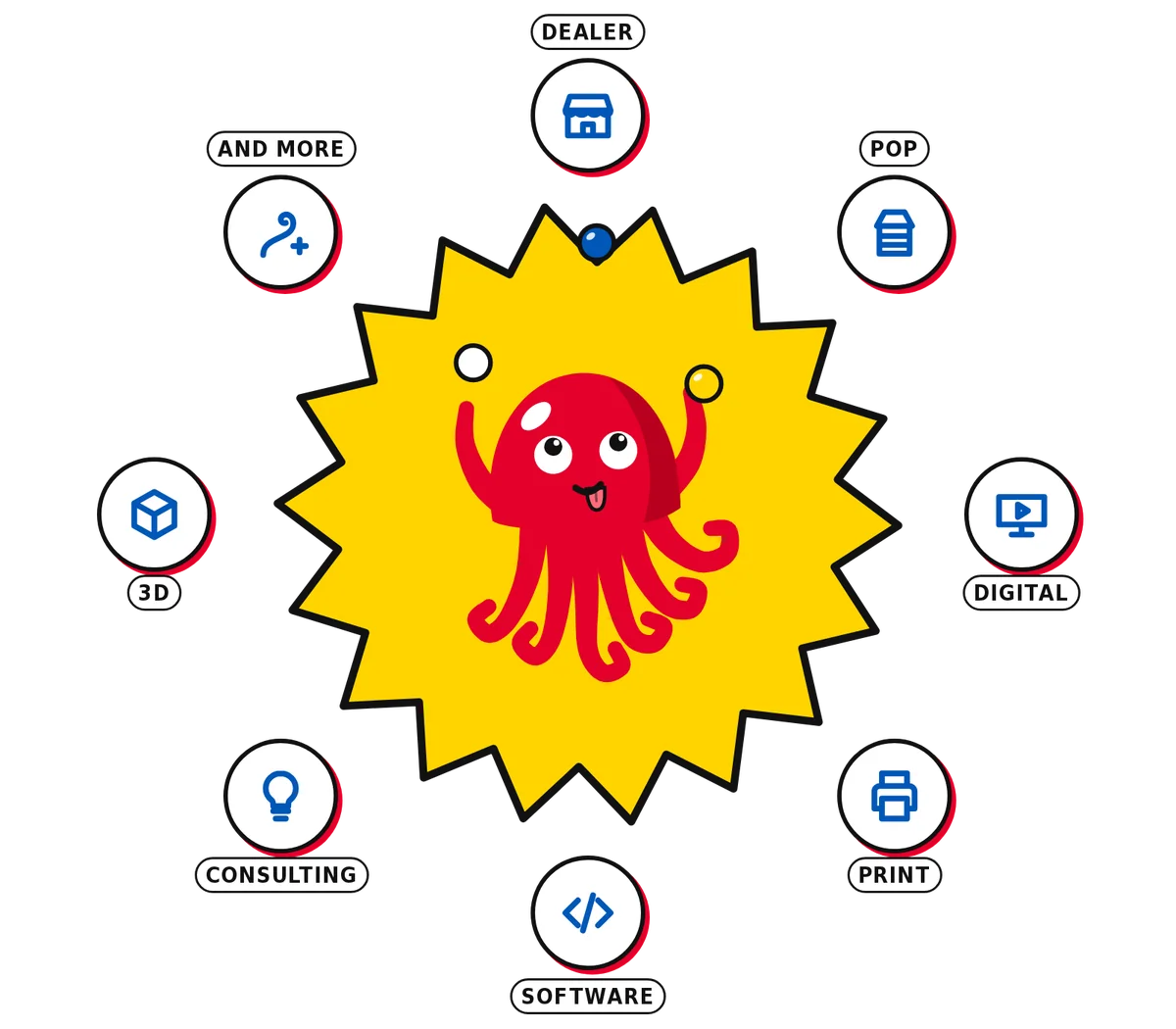
Eight arms.
No dropped balls.
At the dealer, on the shelf, on screen. One plan from survey to installation, with checklists and photo records for field handover.
Clumsy by name. Solid by nature.
Different sides of retail
- Fuel
- Automotive
- Telecom
- FMCG
- Gaming & lottery
- Energy
- Retail
- Insurance
8 ARMS
Eight specialisms, one point of contact
Every service is an arm. Choose what you need, and let’s plan how it all fits together.
PROCESS
One clear line from idea to execution.
First, define what needs to happen and where. Then keep design, production and handover aligned on the same plan.
- 01
Brief
Goal, scope, timeline. One meeting, one document.
Scope-dependent - 02
SURVEY
Site visits, measurements and photos; a digital record for each location.
Scope-dependent - 03
Design & prototype
Design, 3D visualisation and physical prototypes if needed.
Scope-dependent - 04
Production & install
Production, shipping and installation, tracked against a shared application list.
Scope-dependent - 05
MEASURE
Before/after report, field audit and improvement ideas.
Scope-dependent
Material examples
Ideas you can put on a shelf.
Wobblers, shelf stoppers and display headers: one identity, different applications.
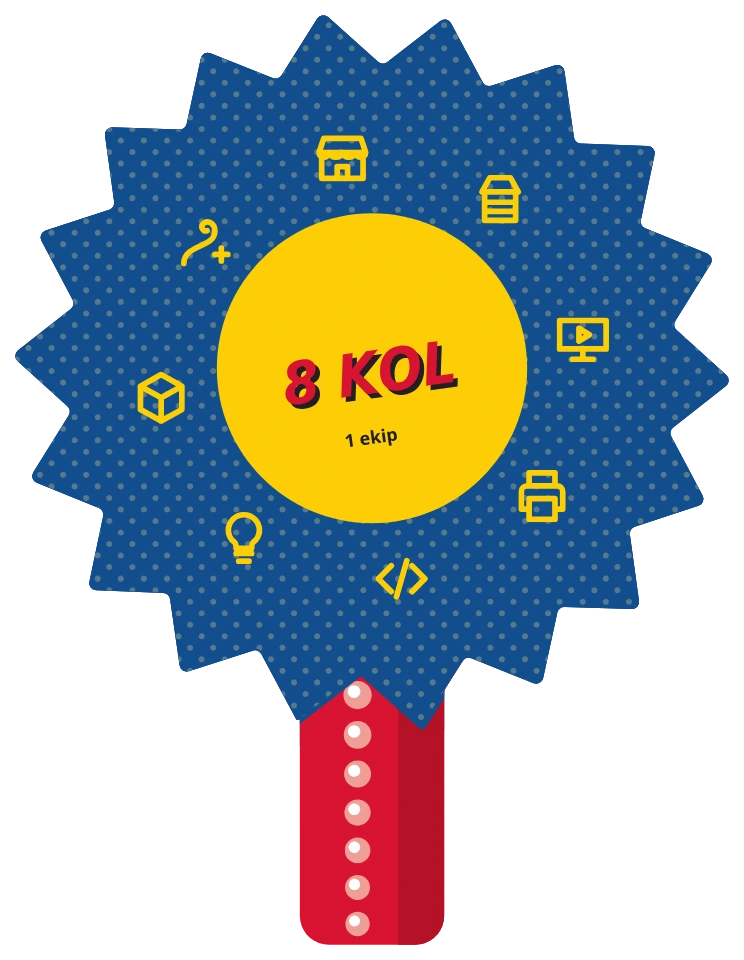
Wobbler
A small point of attention at the shelf edge. The “8 KOL” design shown here is a brand application example.
Sample artwork · Turkish lettering
Shelf stopper
A panel set perpendicular to the shelf, helping the message face the shopper’s path.
Sample artwork · Turkish lettering
Display header
A horizontal area for the main campaign message on a counter or display.
Sample artwork · Turkish letteringConcept work
One idea. Three different settings.
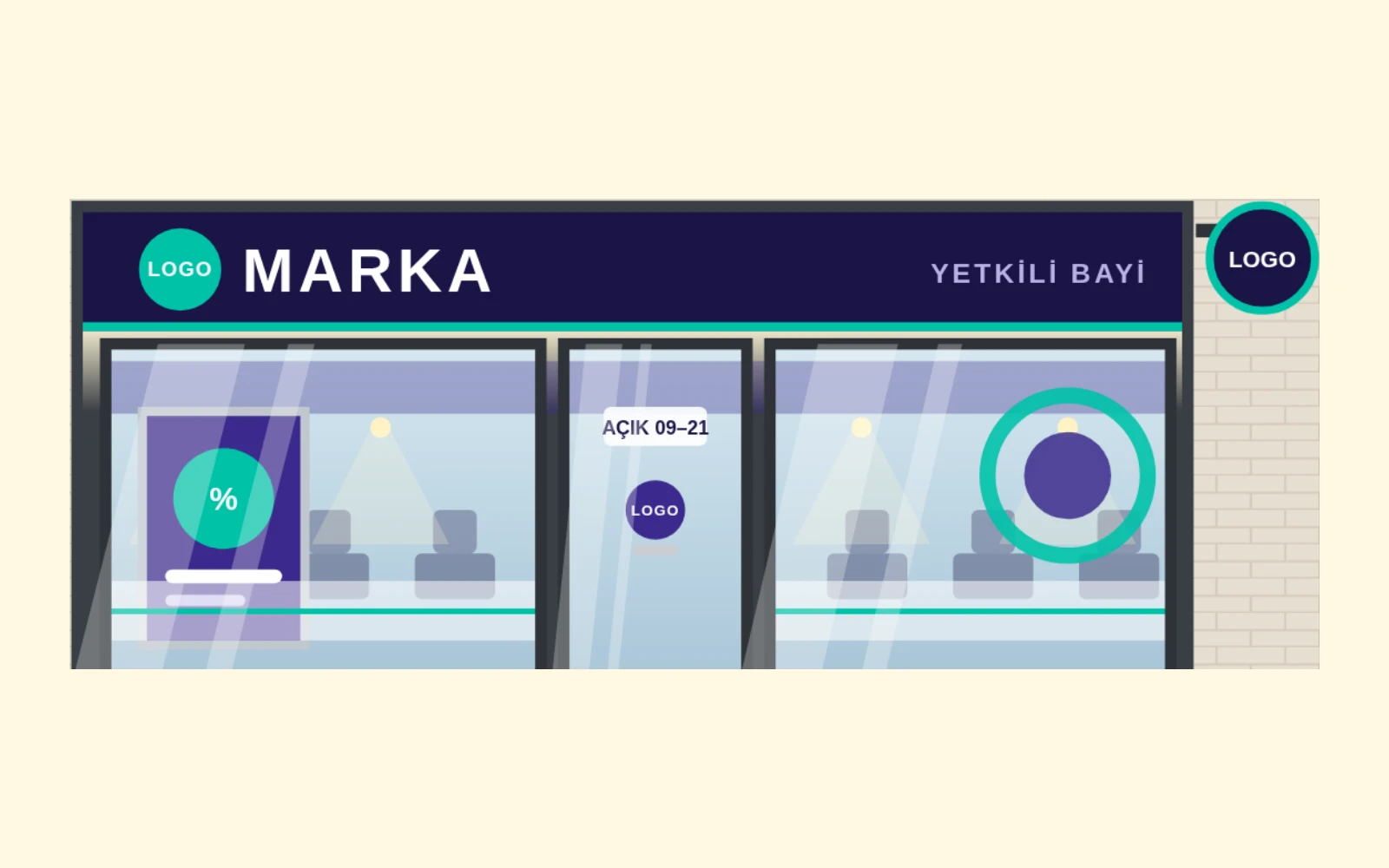 Concept
Dealer network makeover
A modular storefront, window and installation plan for a fictional dealer network.
Explore the concept →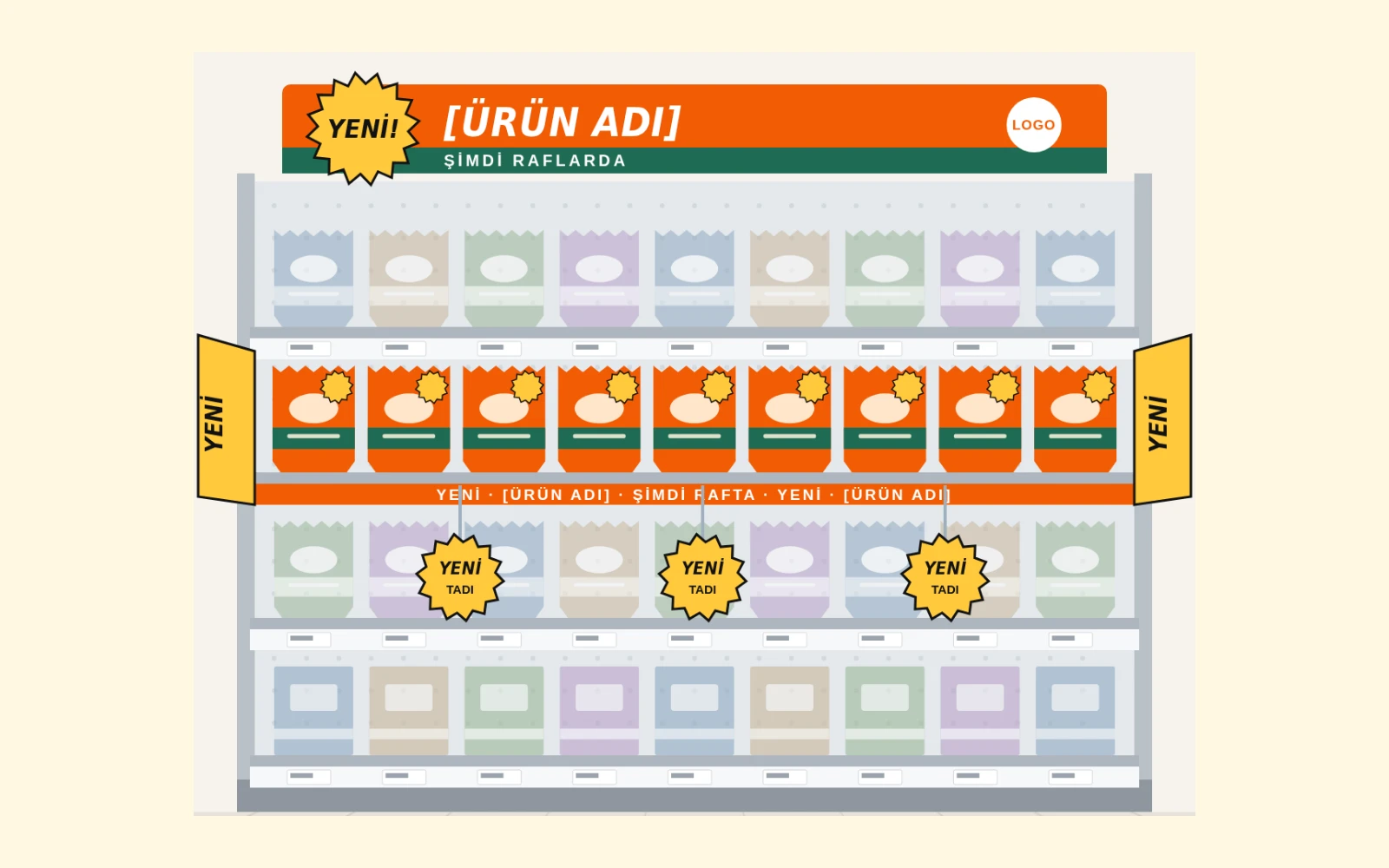 Concept
Shelf launch kit
POP pieces, a planogram and visual installation instructions for a fictional product.
Explore the concept →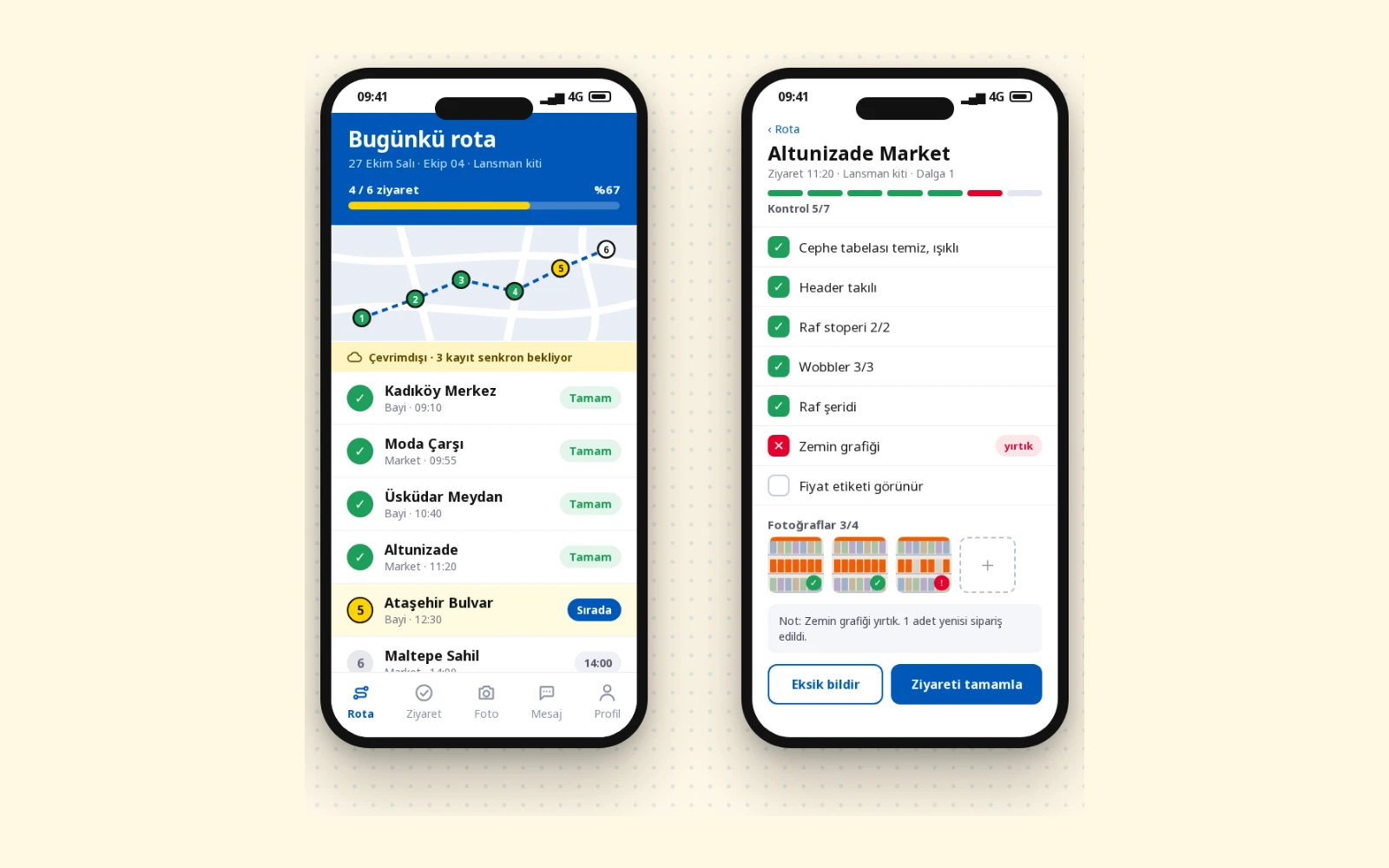 Concept
Field Arm application
A product-interface concept for routes, checklists and photo review.
Explore the concept →How long will your project take?
How do services and locations affect timing? Explore the steps in a sample plan.
Insights
Notes from the shelf

Seven common mistakes in dealer branding
One design will not meet identical conditions at every storefront. A practical checklist for considering dimensions, permissions and installation together.
2 min read · Read →
What is a wobbler? Dimensions, materials and usage
It is easy to crowd a small area at the shelf edge with too many messages. Consider wobbler selection around the message, placement and actual shelf dimensions.
3 min read · Read →
One point of contact, less coordination
Good ideas can get lost when design, print and installation follow different schedules. A shared plan helps close those gaps.
2 min read · Read →From idea to reference
Explore materials and concepts, and find documents that help prepare your project.
AGENCY
Clumsy name. Solid work.
A good idea should stay good in execution. Signage, a shelf display, screen content: we consider design and application together so every part tells the same brand story.
Eight disciplines. One considered project.
Visibility
Work that isn’t noticed on the shelf isn’t done.
Speed
Planned speed: we trust preparation, not rush.
Ownership
Eight jobs, one owner. We carry it end to end.
Joy
We take the work seriously, not ourselves.
Let’s get your project moving.
A campaign, a dealer location, or a brand-new idea? Start with what you need.
FAQ
Frequently asked
Which service should I start with?+
Start with the need: dealer storefront, shelf material, screen content or field tracking. Otto can find relevant services and examples, and you can select several services in one brief.
What does the project plan cover?+
Survey and measurements, design/approval, production/installation and handover checks are planned together. Field scopes can include checklists and photo records.
What information helps prepare a quote?+
Service choices, location and city counts, existing dimensions/artwork, material needs and a target date are a useful start. The five-step brief brings them together.
How are locations planned?+
City and location lists are considered alongside survey, access, permission and installation-hour requirements. Explore the distribution in the planner and add actual locations to the brief.
How can I send my brief?+
Prepare and copy the brief, or open an email draft. Complete sending in your email app, or write directly to hello@clumsyoctopus.com.
BRIEF
Tell us your project
Prepare your project brief in five steps, then copy it or open it in your email app to send.

Start with the services you need, then define the scope and timing in the next steps.

- 1Which arms?
- 2Scope
- 3Timing
- 4Contact
- 5Summary
CONTACT
Start with a clear brief.
Describe what you need in a few sentences. Copy your message or open a draft in your email app, then complete sending there.
- hello@clumsyoctopus.comEmail us about your project or a collaboration.

Start by defining the scope.
Which services, how many locations, and what timing? The brief brings these questions together.
Prepare a brief →